Dark Horse is truly an extended business partner. Before I make any major business decisions, I make sure I speak with them to understand all financial and tax implications. They are more than CPAs, they are truly complete business advisors.
Farm & Ranch Advisory
Agriculture CPAs That Build Around the Season,
Not the Spreadsheet
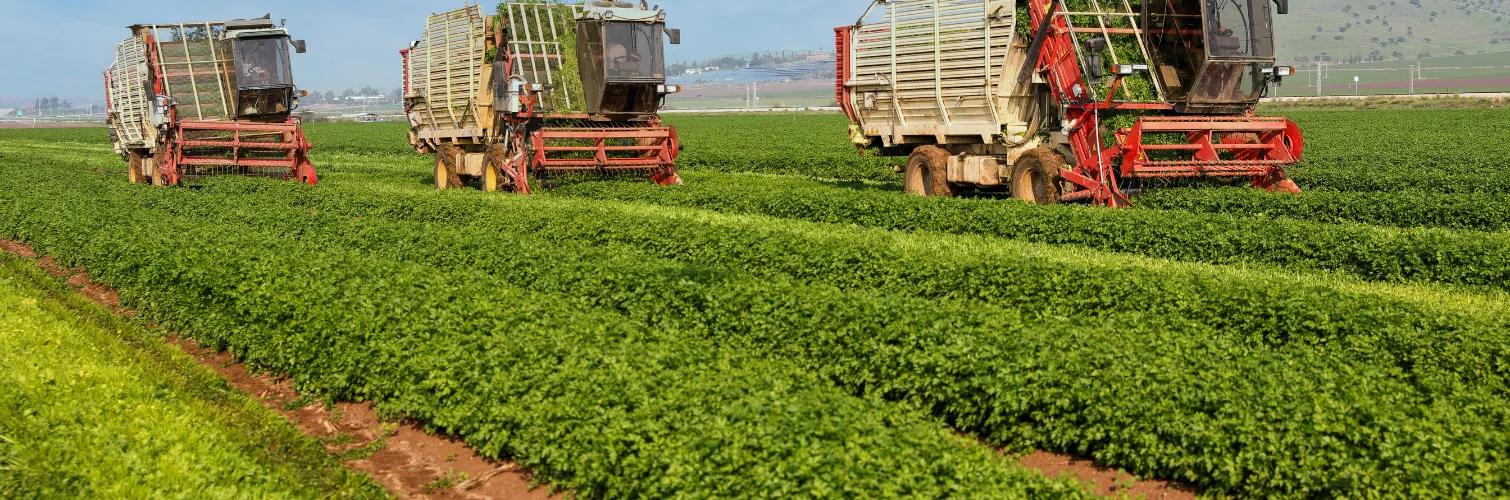
A general CPA can look at the books and see expenses. You see the season behind them: fertilizer bought before the crop is sold, diesel burned before revenue comes in, feed costs moving before the livestock cycle closes, and equipment payments that do not care when harvest happens. Agriculture accounting has to understand timing, not just totals. Crop cycles, livestock operations, depreciation, inventory, cash flow, and tax planning all have to be read in context, or the numbers will always be late to the operation.
Dark Horse CPAs works with agricultural operators whose income arrives in a few large events and whose expenses never stop. Fertilizer, fuel, feed, and equipment payments all hit on their own timeline, and the tax consequences of a purchase or a sale often show up a year later. Our work is keeping the books, the tax plan, and the cash flow picture in sync with the season, so the decisions in front of you are made with real numbers instead of a rough guess.
Keep records organized around crop cycles, livestock activity, inventory, input costs, and seasonal expenses.
Plan around equipment depreciation, income timing, deductions, government programs, and fluctuating farm profits.
Plan around the months between major revenue events, when bills keep moving even if the next check has not landed.
Issues Faced by Agriculture Operators
Rising Input Costs and Margin Pressure
Fertilizer, diesel, seed, and feed costs can shift before production plans or pricing can catch up. The source specifically notes fertilizer jumping, diesel surging before planting, and feed costs rising during a livestock cycle.
Solution
Dark Horse CPAs helps track costs by acre, head, crop, or operation where applicable, so margin pressure is visible earlier. Better cost tracking supports better decisions around supplier timing, production planning, and where cost control needs to happen.
Seasonal Revenue and Year-Round Cash Flow
Agriculture revenue often comes in around harvest, livestock sales, or program payments, while expenses continue throughout the year. Equipment loans, seed, irrigation, payroll, and other costs can create liquidity pressure even in profitable seasons.
Solution
We build cash flow forecasting around the operation’s timing: harvest dates, livestock sales, seasonal expenses, debt service, and expected payments. The point is to see when cash will tighten before the farm is forced into reactive decisions.
Equipment Purchases and Depreciation Strategy
Equipment decisions affect both cash flow and taxes. The document points to equipment financing timing, depreciation method, Section 179, bonus depreciation, MACRS, and buy-versus-lease decisions as planning areas.
Solution
Dark Horse CPAs helps model equipment purchases with tax timing and cash flow in mind. That includes evaluating financing, depreciation options, and whether a purchase supports the operation without creating future tax or liquidity problems.
Crop, Livestock, and Feed Inventory
Agriculture inventory does not behave like static inventory. Grain, hay, livestock, and feed supplies change across cycles, and poor tracking can create surprises in both operations and financial reporting.
Solution
We help structure bookkeeping and inventory tracking around the operation, whether that means crops, livestock, feed usage, or work-in-progress for finishing operations. Better inventory visibility supports better production and profitability decisions.
Government Programs and Agriculture Tax Planning
The source identifies conservation grants, cost-share funding, crop insurance, livestock depreciation, commodity sales timing, and ag-specific credits as areas general CPAs may miss.
Solution
Dark Horse CPAs helps identify relevant agriculture tax opportunities and government programs, document eligibility, and coordinate compliance. This is not just tax-season cleanup; it is planning around the programs and timing that affect the farm’s financial outcome.

Tax + Accounting + Advisory Built Around the Farm Cycle
Our agriculture accounting service brings bookkeeping, tax strategy, and financial advisory into the same field of view. Agriculture accounting earns its value when the numbers are useful early enough to change the outcome.
When farm bookkeeping tracks input costs, crop inventory, livestock timing, equipment purchases, and seasonal cash movement, tax planning gets sharper. We can look at depreciation timing, government program opportunities, cash flow gaps, and margin pressure before the season is already behind you.
Dark Horse CPAs doesn’t treat the farm like a filing project. We keep the books, tax plan, and advisory work moving from the same set of facts, so the financial side of the operation can keep up with planting, harvest, livestock cycles, equipment decisions, and the next season.

Context: client had a large real estate investment portfolio and spent over 50% of their time managing his properties.
Tax Year 2022: Owed $25,566 upon filing of tax return
Carried forward unallowed passive losses of $1,534,713
Problem: prior CPA never evaluated the situation to determine if there was a fact pattern to qualify for becoming a real estate professional.
Solution: during their Tax & Wealth Assessment, we discovered they qualified as a Real Estate Professional. Additionally, we advised the client to perform a Cost Segregation Study on all rental properties.
Carried forward Net Operating Loss of $765,617 to tax year 2023, which saved $262,607 in Federal tax
Tax Year 2022: Amended tax return and claimed $174,183 refund
*Each Tax strategy is unique and requires research into qualifying criteria to ensure we are taking a defensible stance. Results and savings also vary by client.
Dark Horse is truly an extended business partner. Before I make any major business decisions, I make sure I speak with them to understand all financial and tax implications. They are more than CPAs, they are truly complete business advisors.
I would highly recommend Shay James! She is professional and very knowledgeable. She is a business owner as well so she understands the unique needs of a business and advises accordingly. She has not only done an amazing job with our taxes, she has helped our overall business immensely.
As a micro-business owner, I am so happy with the bookkeeping and accounting services from Reed at Dark Horse! I DIY everything else for my business, but it’s SO worth it to leave the books to Reed. Highly recommend for other solopreneurs!
Because farming does not move like a standard business. Revenue may come around harvest or livestock sales, while fertilizer, diesel, feed, equipment payments, payroll, and other costs keep moving all year. An agriculture CPA should understand crop cycles, livestock timelines, depreciation, inventory, government programs, and tax planning before the numbers are already behind the season.
We look at the timing of the operation, not just the bank balance. Harvest revenue, livestock sales, government program payments, seasonal expenses, and debt service all affect when cash gets tight. The goal is to see those pressure points early enough to plan around them.
Equipment decisions affect both taxable income and cash flow. We help evaluate Section 179, bonus depreciation, MACRS depreciation, financing timing, and long-term equipment planning so deductions are useful without creating avoidable problems later.
Yes. We look at financing terms, tax impact, cash flow timing, and the long-term cost of ownership so the decision fits the operation instead of just solving the immediate equipment need.
We plan around timing. Farm income and expenses can shift heavily from one season to the next, so tax planning has to account for equipment purchases, depreciation, crop or livestock sales, cash flow needs, and available agriculture-specific opportunities before the year is already over.